The Sunk Cost Fallacy - Leaning into uncertainty and taking the leap of faith
Have you ever driven 2 hours to get somewhere, only to arrive and find that it is disgustingly busy - but you stay anyway because you just drove 2 hours to get there and turning back now would be a total waste of time.
Or to put it onto an even bigger scale, maybe you spend 4 years at university studying a degree, and have made it through to the end only to realise you hate it and the thought of doing it as a career makes you want to cry. BUT you’ve just spent 4 years of your life studying it so now you MUST make it work - otherwise you’ll be labelled a failure for not seeing it through after all that time, money and energy!
Welcome to the sunk-cost fallacy. This is a cognitive bias that we as humans all have, the idea that you must continue a failing or disappointing endeavour simply because you have already invested time, money and effort into it. Instead of making a rational choice based on future benefits, you make an irrational decision to avoid the feeling of "wasting" your past investments. We as humans have an aversion to loss, psychologically the pain of loss feels twice as heavy as the joy of gaining, we will irrationally double-down on a bad situation to “break-even”, avoid the loss and save face.
So how do you manage it? Or avoid it entirely. Ask yourself this question, “If I were starting from scratch today, knowing what I know now, would I still pursue this path?” If the answer is no, then the best thing you can do for yourself is to cut your losses. Find a different path, and see what happens.
One reason why so many people are hesitant to jump into their teaching careers is because they find themselves in a position where they think they can’t or shouldn’t jump into something new because that would mean admitting defeat on something they’ve been working on and starting from the beginning. This feeling is often what stops people from making change, from taking a leap of faith and from choosing what is truly best for them. That “Oh well best just get on with it” attitude that we have been conditioned to adopt rather than trusting our gut instincts and moving on. It’s time for us to change this way of thinking, and instead lean into uncertainty, because there must be a reason why you’re looking elsewhere - something in you that’s searching for change.
Feelings of uncertainty marry up beautifully with feelings of inadequacy - it’s a match made in heaven which will definitely delay you from pursuing something new, despite knowing deep down it’s what you need to do. We see it a lot from our trainees when they first begin on the road to becoming a teacher. Little gremlins of doubt creep in to tell us we are not good enough to start this new chapter because ‘look at all these other people doing way better than me!’.
Comparison: the thief of joy.

In yoga, when we have these crises, we seek answers and insight from the ancient texts - you soon realise that these feelings of doubt, fear, distrust in your ability have been part of the human experience since the beginning of time.
We can use these examples from the texts as a “what to do” when self-doubt creeps in.
Yoga Sutras of Patanjali
Patanjali acknowledges that the path to inner peace requires active self-belief and continuous effort.
Yoga Sutra 1.20: "Shraddhavirya smriti samadhi prajna purvaka itaresham"
The Translation:
For others, spiritual realization is preceded by faith (shraddha), dynamic energy (virya), mindfulness (smriti), and the wisdom born of deep absorption (samadhi prajna).
Real life Application:
This teaches you that when self-doubt creeps in, you must consciously invoke faith. In yoga philosophy, shraddha means "that which you hold in your heart"—a settled, deep confidence in your ability to succeed. Faith fuels your heroic effort (virya), which ultimately protects and grounds your path.
We can also take lessons from the Bhagavad Gita; before the great battle Arjuna worried that he wasn’t capable enough and compared himself to others. Krishna reminds him to embrace the concept of swadharma -
“It is always better to live your own life imperfectly than to perfectly imitate someone else’s.”
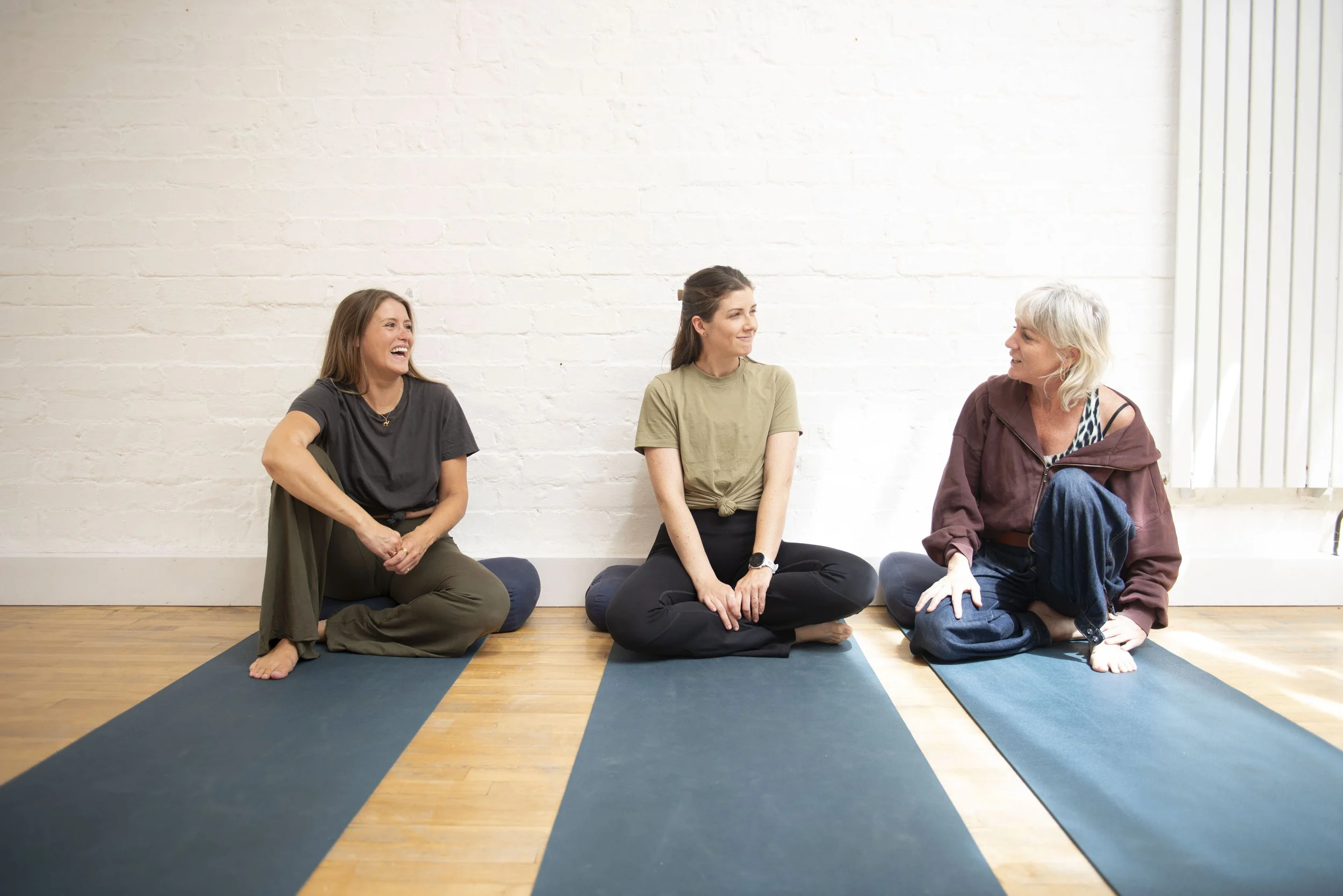
From left: Immy, Ainsley, Laura
So how do we apply all of this to our own life and the decisions we make?
For one, acknowledge that self-doubt, uncertainty, fear and distrust of one’s own choices is part of the human experience. Understand it is not a failure to feel unsure about something, just as it is not a failure to change direction and pursue a new path. If you find yourself reeling in the sunk-cost fallacy, whether that be from a career you feel stuck in or a place in your life that feels incomplete, remember that you have a strength within you, just as Arjuna did, that is crying out to be utilised and embraced. Your instincts are telling you something and perhaps now is the time to lean in and embrace that feeling of uncertainty and choose a different path - there are no guarantees, but as Jim Carey once said “You can fail at what you don’t want. So you might as well take a chance at doing what you love.”
Need to make a change? Check out our 200hr Yoga Teacher Trainings - starting in October 2026